



L’essor fulgurant des jeux d’argent numériques a transformé le paysage du divertissement. Aujourd’hui, des millions de joueurs se connectent chaque jour, persuadés que la seule variable est la chance pure. Cette impression, pourtant, masque une réalité bien plus structurée : chaque spin, chaque main et chaque mise sont gouvernés par des modèles probabilistes, par la théorie des jeux et par des algorithmes de génération de nombres aléatoires (RNG) qui assurent l’équité du système.
Pour qui veut creuser sous la surface, le nouveau guide « nouveau casino » d’Ereel propose une première étape de compréhension : https://www.ereel.org/nouveau-casino-en-ligne. En le consultant, le lecteur découvre comment les licences, comme la licence ANJ, encadrent ces mécanismes et garantissent la transparence.
Nous allons décortiquer six domaines clés : les RNG qui animent les machines, les probabilités des slots, les stratégies du blackjack, les subtilités de la roulette, les modèles des paris sportifs et les innovations apportées par la blockchain et l’intelligence artificielle. Chaque partie combine théorie et exemples concrets afin que le joueur expérimenté puisse transformer la simple intuition en avantage chiffré.
Le concept de RNG trouve ses racines dans les tirages mécaniques des premiers casinos terrestres. Au fil des décennies, les concepteurs ont migré vers des algorithmes informatiques, le plus célèbre étant le Mersenne Twister, capable de produire 2 199 377 058 4 × 10¹⁹ nombres avant de se répéter. Les plateformes les plus modernes adoptent même des RNG cryptographiques basés sur SHA‑256 ou ChaCha20, afin de rendre la prédictibilité mathématique pratiquement impossible.
Techniquement, un RNG fonctionne grâce à un « seed », une valeur initiale souvent dérivée de l’horloge du serveur, de l’activité du réseau ou d’un dispositif matériel (hardware RNG). Le seed déclenche une suite de valeurs uniformément réparties entre 0 et 1. La période décrit le nombre de tirages avant que la séquence ne recommence ; plus elle est grande, plus le système est résistant aux attaques. Les laboratoires indépendants testent l’uniformité à l’aide de batteries comme NIST SP 800‑22 ou TestU01, qui détectent tout biais statistique.
L’équité repose sur la certification. Des organismes comme eCOGRA ou iTech Labs soumettent chaque implémentation à des audits rigoureux, vérifiant que les sorties du RNG respectent les spécifications déclarées. Une fois le rapport publié, les joueurs peuvent consulter les résultats sur les sites des casinos.
Exemple chiffré : imaginons une machine à sous à 5 rouleaux comportant 20 000 symboles différents, répartis uniformément. La probabilité d’obtenir la combinaison « 777 » sur une ligne active est alors :
[
P(777)=\left(\frac{1}{20\,000}\right)^3 \approx 1,25 \times 10^{-13}
]
Autrement dit, il faut en moyenne 8 000 000 000 000 000 de tours pour espérer voir apparaître les 777, ce qui montre l’impact direct du RNG sur le jackpot.
Le paramètre le plus souvent cité par les joueurs est le RTP (Return to Player). Un RTP de 96 % signifie que, sur le long terme, le jeu rend 96 € pour chaque tranche de 100 € misée. Cette valeur diffère du taux de gain réel, qui dépend de la volatilité et du nombre de mises effectuées.
La volatilité mesure la dispersion des gains ; on distingue trois catégories : low (paiements fréquents mais modestes), medium (équilibre) et high (gains rares mais massifs). Les tables de paiement traduisent cette variance en indiquant la fréquence de chaque combinaison gagnante.
La fréquence de hit (Hit %) se calcule ainsi :
[
\text{Hit %}= \frac{\text{Nombre de combinaisons gagnantes}}{\text{Total des combinaisons possibles}}
]
Par exemple, sur une slot à 5 rouleaux avec 10 symboles par rouleau, le nombre total de combinaisons est 10⁵ = 100 000. Si la table indique 500 combinaisons gagnantes, le Hit % est de 0,5 %.
Supposons une payline où trois symboles identiques rapportent 10 x la mise, mais où un wild double la mise lorsqu’il apparaît. Si la probabilité d’obtenir le wild sur un rouleau est 1/20, l’espérance devient :
[
E = P(\text{3 identiques}) \times 10 \times \text{mise} + P(\text{wild}) \times 2 \times \text{mise}
]
Dans un scénario où (P(\text{3 identiques}) = 0,001) et (P(\text{wild}) = 0,05), on obtient :
[
E = 0,001 \times 10 + 0,05 \times 2 = 0,01 + 0,10 = 0,11 \text{ mise}
]
Cette petite hausse illustre comment les fonctionnalités bonus modifient l’espérance globale sans altérer le RTP déclaré.
Le tableau de basic strategy du blackjack repose sur les probabilités de bust (dépasser 21) pour chaque main du joueur et chaque carte visible du croupier. Par exemple, avec une main de 12 contre un 6 du croupier, la probabilité de bust en tirant est d’environ 31 %, alors que rester donne une chance de victoire de 58 %.
L’espérance (EV) d’une main peut être calculée en pondérant les gains (1,5 x pour un Blackjack, 1 x pour une victoire, -1 x pour une perte) par leurs probabilités respectives. Prenons la situation 10 contre As : la probabilité de gagner est 0,44, de perdre 0,48 et de pousser 0,08. L’EV = 0,44 × 1 – 0,48 × 1 = ‑0,04, soit une perte attendue de 4 % de la mise.
Le comptage de cartes, efficace sur les tables physiques, s’effondre face aux RNG. Les casinos en ligne utilisent un « shuffle‑engine » qui remélange virtuellement le sabot après chaque main ou à intervalles aléatoires, rendant le suivi des cartes obsolète.
Résultats de la simulation :
| Type de joueur | Gain moyen (€/10 000 mains) | Écart‑type |
|---|---|---|
| Optimal | + 78,5 | 45,2 |
| Moyen | – 124,3 | 62,7 |
Ces chiffres montrent que la discipline mathématique peut inverser la tendance négative inhérente à la plupart des jeux.
Les roues européennes (single zéro) offrent 37 cases, tandis que les américaines ajoutent le double zéro (38 cases). La version française introduit les règles « en prison » et « la partage », qui réduisent l’avantage du casino de 2,70 % à 1,35 % sur les paris à chances égales (rouge/noir, pair/impair).
Le gain attendu (EV) d’un pari intérieur (ex. : plein) est :
[
EV = \frac{1}{37}\times35 – \frac{36}{37}\times1 = -0,027 \text{ (roue européenne)}
]
Pour les paris extérieurs (ex. : rouge), l’EV passe de –2,70 % à –1,35 % avec l’option « en prison ».
Le pari « voisin du zéro » couvre 17 numéros autour du 0. La probabilité de toucher l’un de ces numéros est 17/37 ≈ 45,95 %. Le paiement standard est 17 : 1, ce qui donne un EV de :
[
EV = 0,4595 \times 17 – 0,5405 \times 1 = -0,054 \text{, soit –5,4 %}
]
En appliquant la règle « en prison », le perdant récupère la moitié de sa mise, réduisant l’EV à environ –2,7 %.
Convertir les cotes en probabilité implicite est la première étape d’une analyse rigoureuse. Une cote décimale de 2,80 correspond à une probabilité de (1/2,80 ≈ 35,71 %).
Le value betting consiste à comparer cette probabilité implicite à une estimation indépendante (souvent obtenue via modèles statistiques). Si l’on estime que la vraie probabilité d’un résultat est de 45 %, la mise possède une valeur positive.
Les modèles de Poisson sont largement utilisés pour prédire le nombre de buts dans un match de football, tandis que le système Elo mesure la force relative des équipes.
Supposons que l’analyse Poisson indique une probabilité de victoire de l’équipe A de 40 %. La cote proposée est 2,80. La valeur attendue (EV) se calcule ainsi :
[
EV = (0,40 \times 2,80) – (0,60 \times 1) = 1,12 – 0,60 = 0,52
]
Un EV positif de 0,52 signifie que, sur le long terme, chaque euro misé rapporterait 0,52 € de profit théorique, justifiant le pari.
Les crypto‑casinos intègrent la blockchain pour rendre le RNG totalement vérifiable. Un smart contract publie le seed et le résultat du tirage sous forme de transaction immuable, permettant aux auditeurs de reproduire le calcul et de confirmer l’absence de manipulation.
Parallèlement, certains fournisseurs développent des jeux à probabilité adaptative. L’IA analyse le comportement du joueur (durée de session, mise moyenne, taux de victoire) et ajuste le RTP en temps réel afin de maximiser la rétention. Un joueur gagnant régulièrement peut voir son RTP baisser légèrement, tandis qu’un profil à pertes fréquentes verra le RTP augmenter, créant ainsi une expérience perçue plus « équitable ».
Ces pratiques soulèvent des questions de régulation. Les autorités comme l’ANJ exigent une transparence totale, mais la nature décentralisée des contrats intelligents complique les audits classiques. Les joueurs doivent donc rechercher des plateformes qui publient des rapports de vérification indépendants.
Un oracle blockchain fournit un hash SHA‑256 aléatoire à chaque lancer. Le hash, exprimé en entier, est réduit modulo 6 + 1 pour obtenir une face :
[
\text{Face} = (\text{hash} \bmod 6) + 1
]
Comme SHA‑256 produit une distribution uniformément aléatoire sur l’ensemble des entiers 0‑2²⁵⁶‑1, chaque face a exactement la même probabilité :
[
P(\text{face } i) = \frac{1}{6} \approx 16,67 %
]
Cette transparence mathématique est auditée en temps réel, renforçant la confiance du joueur.
Nous avons parcouru les fondements qui sous-tendent chaque jeu de casino en ligne : le RNG qui assure l’aléa, le RTP et la volatilité qui définissent les retours, les stratégies optimales du blackjack, les calculs d’avantage de la roulette, la conversion des cotes sportives et les innovations blockchain‑IA qui redéfinissent la dynamique des gains.
Pour le joueur averti, maîtriser ces concepts permet de transformer le hasard apparent en décisions éclairées, de mieux gérer la bankroll et d’identifier les opportunités de valeur réelle. L’évolution constante des algorithmes, notamment l’intégration de l’intelligence artificielle et des contrats intelligents, impose une veille régulière.
Consultez le guide d’Ereel pour choisir un casino en ligne fiable, conforme aux exigences de la licence ANJ et aux standards mathématiques présentés ici. Une compréhension approfondie reste le meilleur atout pour profiter du divertissement tout en maintenant un contrôle rigoureux de ses mises.



Ryan graduated with a Bachelor of Science in Nursing (BSN) in 2011 from Wayne State University in Detroit, MI. Upon graduating he started working in the ICU at Detroit Receiving Hospital in the Burn Unit where he specialized in treating trauma patients along with being a wound care specialist. It was there that he gained tremendous knowledge of the skin and how to recognize and treat burns and other skin related trauma. He also graduated with a Bachelor in Business Administration (BBA) in 2001 from Western Michigan University in Kalamazoo, MI, where he majored in Integrated Supply Chain Management (ISM) and minored in mathematics.
Ryan has earned two official certificates from the State of Colorado; Certified Laser Tattoo Specialist and Laser Safety Officer.
Ryan holds a license from the State of Michigan as a Registered Nurse (RN).
Ryan grew up in Metro Detroit, and has two sons named Jonathan and Christian and a daughter named Kaia. He enjoys golf, wakeboarding, and wakesurfing in the summer and skiing and snowmobiling in the winter.
Ryan is involved with the SaveHaiti volunteer team and he completed a one week mission to Haiti in 2013. During his mission trip their group helped set up a free clinic for local Haitians, which also included an operating room designed to perform cataract surgeries. During his time there, they assisted the locals with general health screenings, administering eye exams in conjunction with passing out the appropriate prescription glasses, and performing cataract surgeries for those in need. He is also involved in the annual Children’s Christmas Workshop in Northville, MI where they teach kids how to make presents for their friends and family by hand using tools under adult supervision. Each year they select 7 different gifts for the kids to construct from scratch with traditional materials like wood, wire, sheet tin, etc., and using other recycled materials, they then gift wrap them so they can be given away as presents. It is a wonderful learning experience for all the kids involved.
Dr. Silveira received her medical degree from the State University of New York at Stony Brook and completed her residency in Primary Care Internal Medicine at the Oregon Health and Sciences University in Portland OR. She has been practicing general medicine since 1999. She has a special interest in general cosmetic dermatology. She enjoys art, theater, and jazz. Read more.

I would like more information on

Call now to schedule your Free Consultation! 734-629-5434
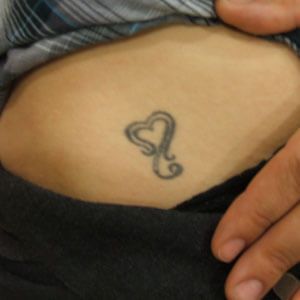
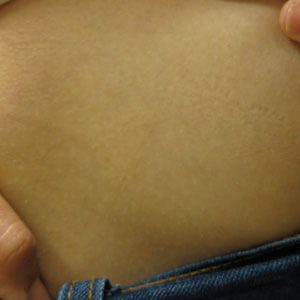
AGE OF TATTOO: 8 years old
STYLE: Professional
SIZE: 1 sq. inch, $99
NUMBER OF TREATMENTS: 4 treatments

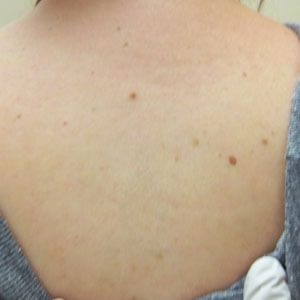
AGE OF TATTOO: 14 years old
STYLE: Professional
SIZE: 1.5 sq. inches, $119
NUMBER OF TREATMENTS: 6 treatments

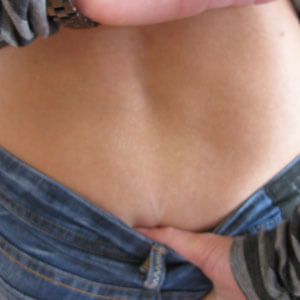
AGE OF TATTOO: 7 years old
STYLE: Professional
SIZE: 3 sq. inches, $177
NUMBER OF TREATMENTS: 6 treatments
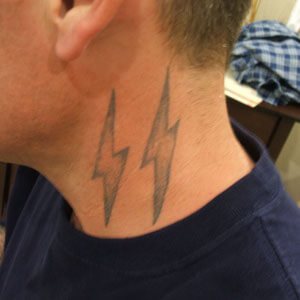
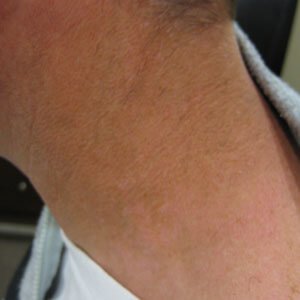
AGE OF TATTOO: 6 years old
STYLE: Professional
SIZE: 5 sq. inches, $255
NUMBER OF TREATMENTS: 5 treatments
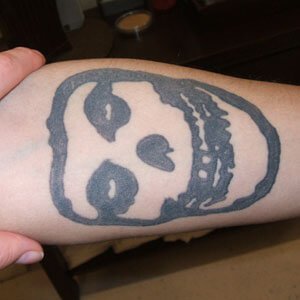
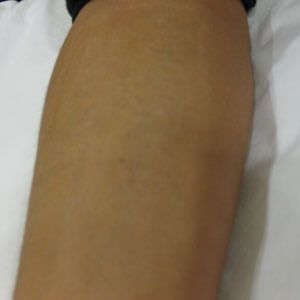
AGE OF TATTOO: 12 years old
STYLE: Amateur
SIZE: 7 sq. inches, $294
NUMBER OF TREATMENTS: 12 treatments
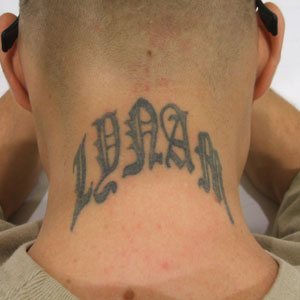
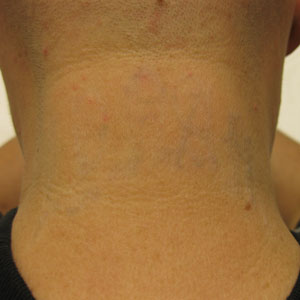
AGE OF TATTOO: 10 years old
STYLE: Professional
SIZE: 5 sq. inches, $255
NUMBER OF TREATMENTS: 10 treatments

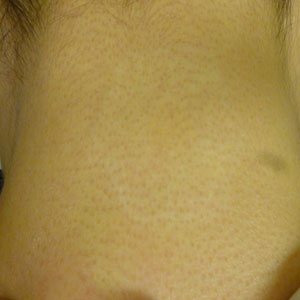
AGE OF TATTOO: 10 years old
STYLE: Professional
SIZE: 5 sq. inches, $255
NUMBER OF TREATMENTS: 10 treatments

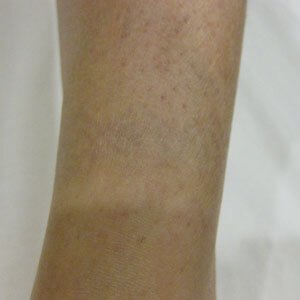
AGE OF TATTOO: 8 years old
STYLE: Professional
SIZE: 7 sq. inches, $294
NUMBER OF TREATMENTS: 10 treatments
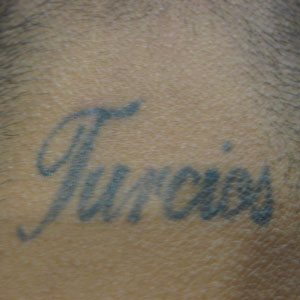

AGE OF TATTOO: 5 years old
STYLE: Professional
SIZE: 4 sq. inches, $216
NUMBER OF TREATMENTS: 7 treatments
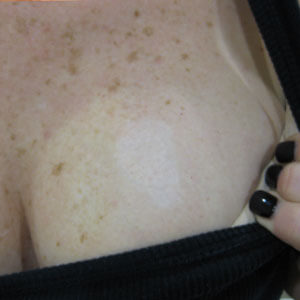
AGE OF TATTOO: 17 years old
STYLE: Professional
SIZE: 2 sq. inches, $138
NUMBER OF TREATMENTS: 4 treatments
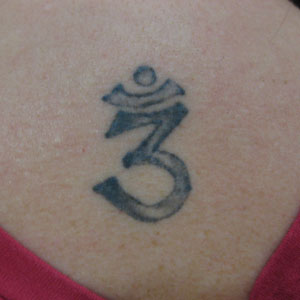
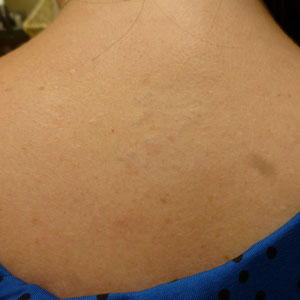
AGE OF TATTOO: 8 years old
STYLE: Professional
SIZE: 3 sq. inches, $177
NUMBER OF TREATMENTS: 5 treatments
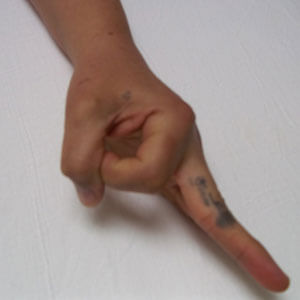
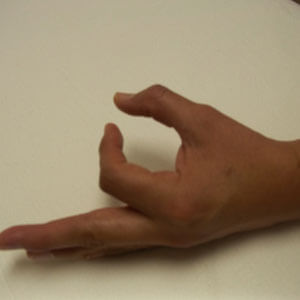
AGE OF TATTOO: 9 years old
STYLE: Amateur
SIZE: 1 sq. inch, $99
NUMBER OF TREATMENTS: 6 treatments
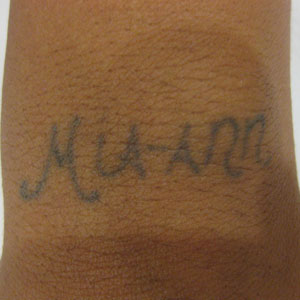
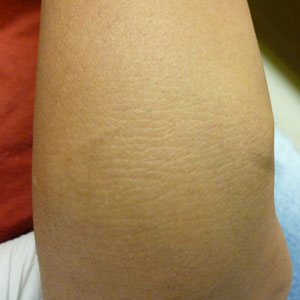
AGE OF TATTOO: 10 years old
STYLE: Professional
SIZE: 1.5 sq. inches, $119
NUMBER OF TREATMENTS: 2 treatments
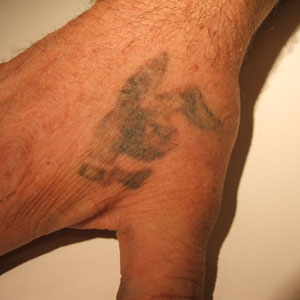
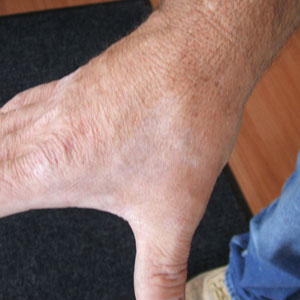
AGE OF TATTOO: 20 years old
STYLE: Amateur
SIZE: 1.5 sq. inches, $119
NUMBER OF TREATMENTS: 6 treatments
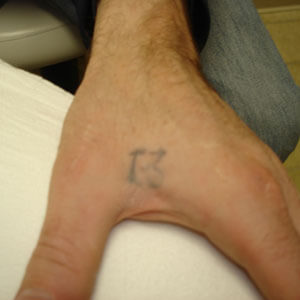
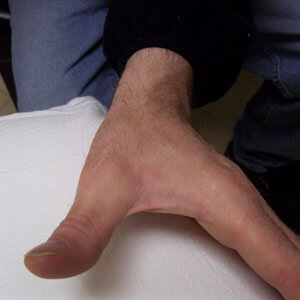
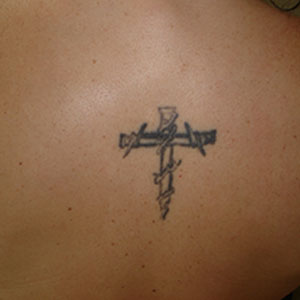
AGE OF TATTOO: 15 years old
STYLE: Amateur
SIZE: <1 sq inch, $49
NUMBER OF TREATMENTS: 3 treatments
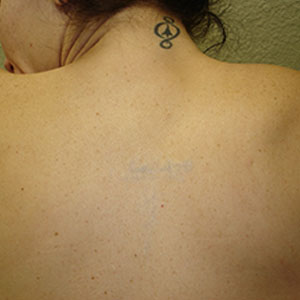
AGE OF TATTOO: 8 years old
STYLE: Professional
SIZE: 3 sq. inches, $177
NUMBER OF TREATMENTS: 5 treatments
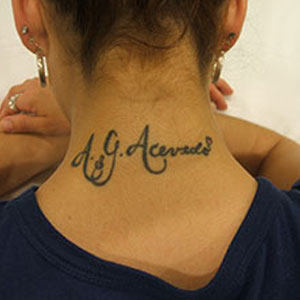
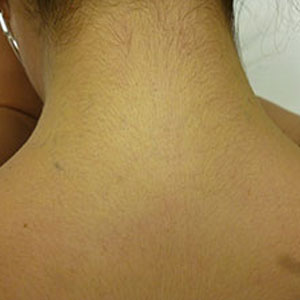
AGE OF TATTOO: 3 years old
STYLE: Professional
SIZE: 3 sq. inches, $177
NUMBER OF TREATMENTS: 4 treatments
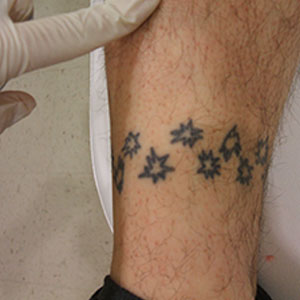
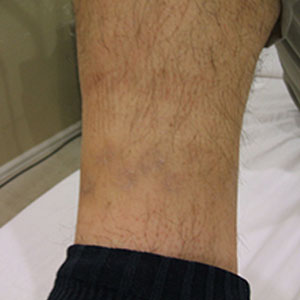
AGE OF TATTOO: 11 years old
STYLE: Professional
SIZE: 4 sq. inches, $216
NUMBER OF TREATMENTS: 9 treatments
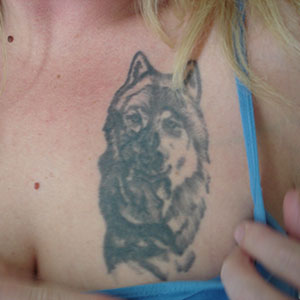
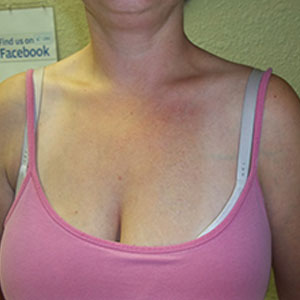
AGE OF TATTOO: 10 years old
STYLE: Professional
SIZE: 9 sq. inches, $294
NUMBER OF TREATMENTS: 8 treatments